
Search South Carolina Civil Court Records
South Carolina civil court records are public documents maintained by the Clerk of Court in each of the state's 46 counties. The Court of Common Pleas handles all civil matters filed in South Carolina, from contract disputes and property claims to personal injury actions and foreclosure proceedings. You can search these civil court records online through the South Carolina Judicial Branch Public Index, by contacting your county Clerk of Court, or by visiting the courthouse in person.
South Carolina Civil Court Records Quick Facts
Where to Search South Carolina Civil Court Records
South Carolina provides several ways to look up civil court records. The fastest option for most people is the online Public Index maintained by the South Carolina Judicial Branch. This system gives free access to civil case information across all 46 counties. You can search from any device at any hour. In-person visits to the county Clerk of Court work best when you need certified copies or want to review the complete case file.
The South Carolina Public Index is the primary public access portal for trial court records. It covers civil cases filed in the Court of Common Pleas in every county. You can search by case number, party name, or attorney name. The system shows case details including filing dates, party information, docket entries, and scheduled hearings. To use it, you must first accept the terms of service. Your browser must support cookies and JavaScript, and some browsers need pop-up exceptions enabled to view full case details.
The South Carolina Judicial Branch recently redesigned its main website at sccourts.org to improve access to court records and legal resources across the state.
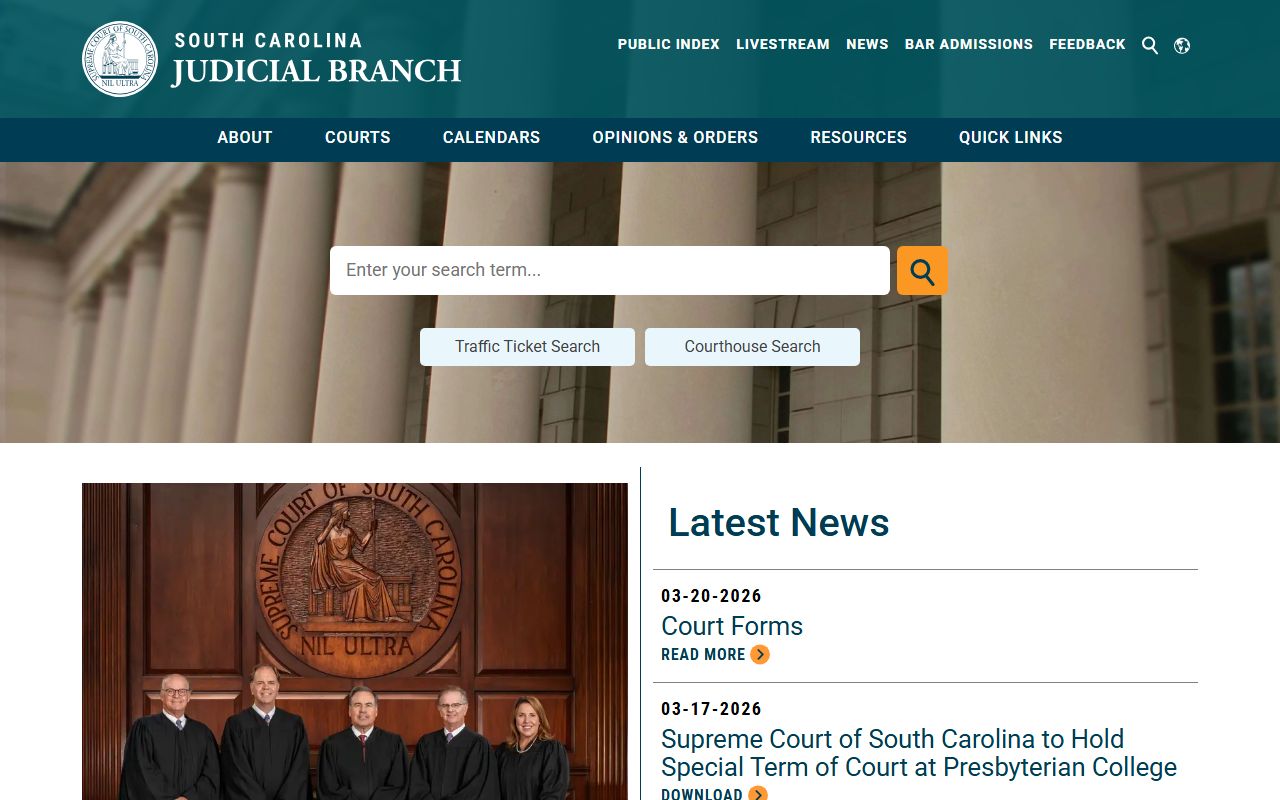
The redesigned site includes Spanish translation, improved county-specific contact pages, and a feedback form in the navigation menu. It also provides centralized access to court forms, self-help resources, e-filing tools for attorneys, and information about all 16 judicial circuits across South Carolina.
Note: The Public Index may not immediately reflect recent entries made by the Clerk of Court. Contact the county clerk directly to verify information or obtain records not yet visible online.
The Court of Common Pleas and Civil Cases
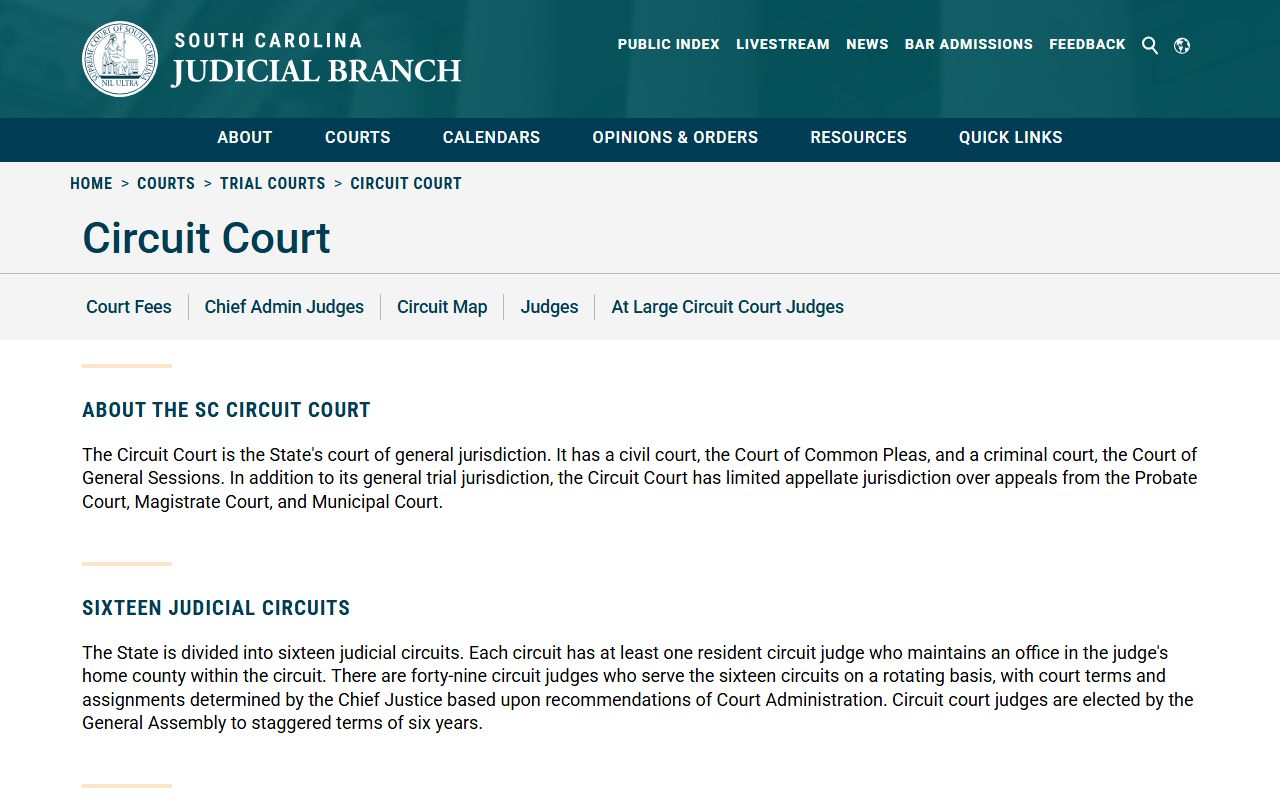
South Carolina's Circuit Court is the state's court of general jurisdiction. It contains two divisions: the Court of Common Pleas for civil matters and the Court of General Sessions for criminal matters. The Court of Common Pleas is where you find civil court records for most lawsuits filed in South Carolina.
The state is divided into 16 judicial circuits. Each circuit has at least one resident circuit judge. Forty-nine circuit judges serve all 16 circuits on a rotating basis. Court terms and assignments are set by the Chief Justice based on recommendations from Court Administration. Per Title 14 of the South Carolina Code of Laws, circuit court judges are elected by a joint vote of the General Assembly for six-year terms.
The Court of Common Pleas handles the full range of civil actions in South Carolina. These include contract disputes, personal injury claims, property disputes, business and commercial litigation, foreclosure proceedings, partition actions, and declaratory judgment actions. Any civil case where the amount in controversy exceeds $7,500 typically goes to the Court of Common Pleas.
Types of Civil Court Cases in South Carolina
South Carolina civil court records cover a wide range of case types. Each type generates its own set of documents that become part of the public record. Understanding what kind of case you are looking for helps you find the right records faster.
Common types of civil cases in South Carolina's Court of Common Pleas include:
- Contract disputes and breach of contract claims
- Personal injury actions including automobile accidents
- Real property disputes and title actions
- Business and commercial litigation
- Foreclosure proceedings on real property
- Partition actions to divide jointly owned property
- Declaratory judgment actions seeking court rulings on rights
Each filed case gets a case number and a docket. The docket shows every document filed and every action taken. You can view docket entries through the Public Index. For copies of actual documents, you contact the Clerk of Court in the county where the case was filed.
Master-In-Equity Court and Civil Records
South Carolina has a specialized division of the Circuit Court called the Master-in-Equity. Counties with a population of at least 130,000 qualify to have one. Currently, 23 counties in South Carolina have a Master-in-Equity. These courts handle specific types of civil matters, particularly foreclosure cases and other equity proceedings.
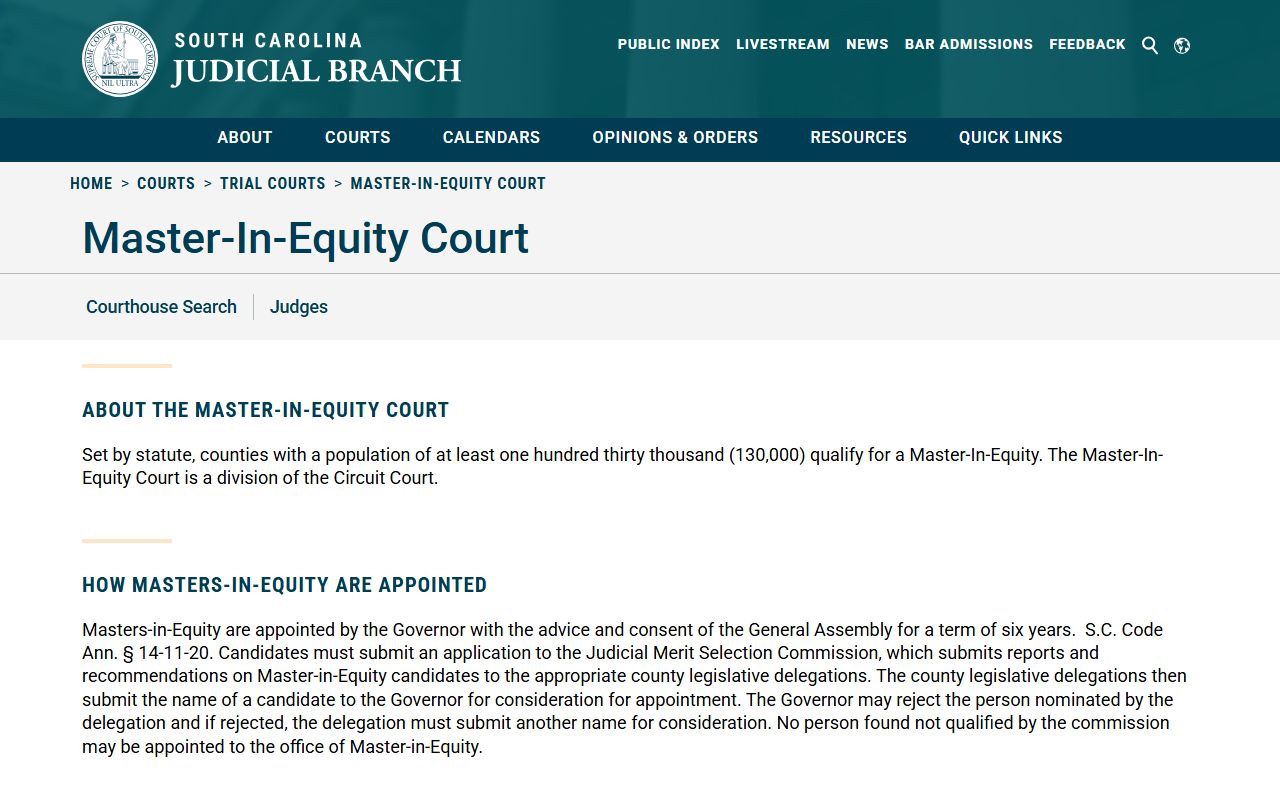
Masters-in-Equity are appointed by the Governor with the advice and consent of the General Assembly for six-year terms, as set forth in S.C. Code Ann. § 14-11-20. They have the full power of the Circuit Court sitting without a jury. Their jurisdiction covers matters referred to them by the Circuit Courts, and they can rule on motions, require production of evidence, rule on admissibility, call witnesses, and conduct judicial sales. Civil court records from Master-in-Equity proceedings are maintained by the county Clerk of Court and are accessible through the Public Index.
Note: Under Act 55 of 1999 and Rule 53 of the South Carolina Rules of Civil Procedure, appeals from final judgments by Masters-in-Equity go directly to the Supreme Court or Court of Appeals rather than through the Circuit Court.
Magistrate Court Civil Filings
Not all civil cases go to the Court of Common Pleas. Magistrate Courts in South Carolina handle civil matters when the amount in controversy does not exceed $7,500. There are approximately 300 magistrates serving across the state, each appointed by the Governor for four-year terms.
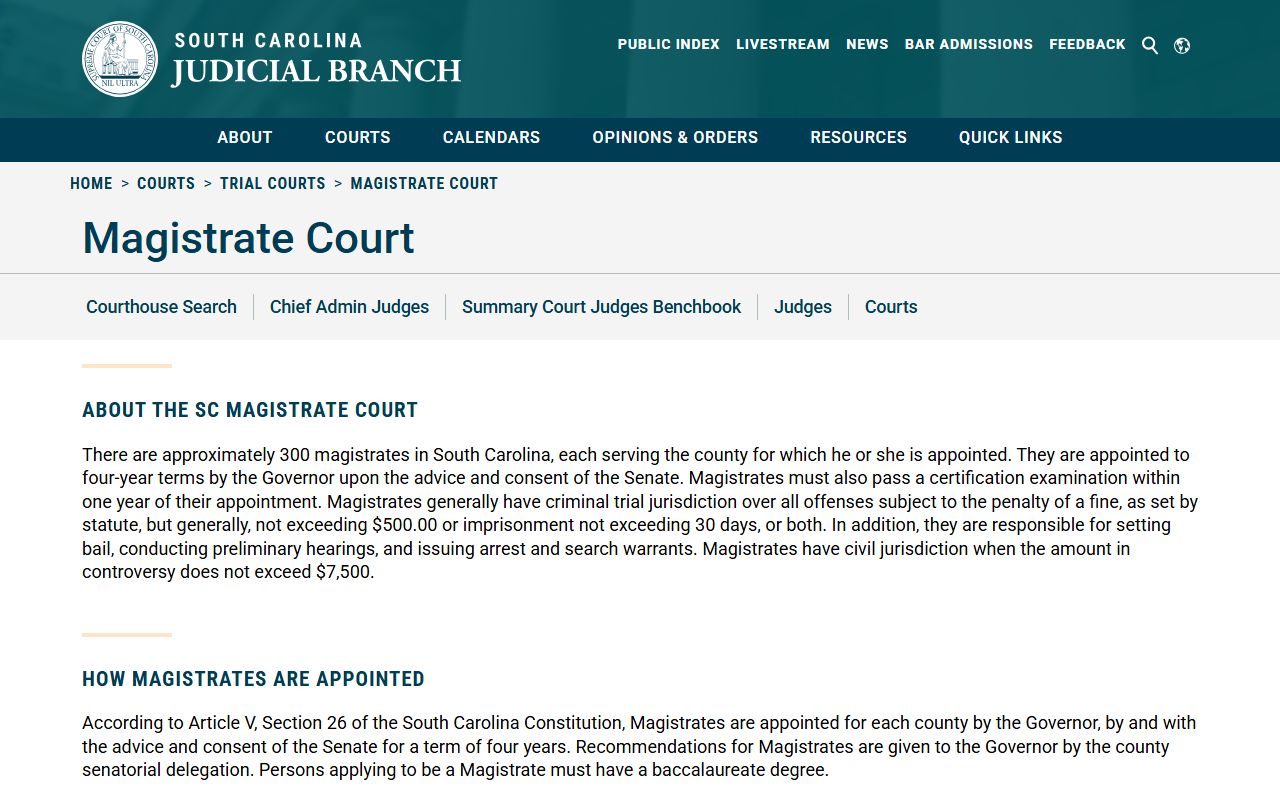
Magistrate Court civil jurisdiction covers contract disputes, personal property recovery actions, and money judgment actions under the $7,500 threshold. This court is where most small claims cases are filed in South Carolina. Records for Magistrate Court civil cases are kept at the county level. Some Magistrate Court records are accessible through the statewide Public Index at sccourts.org, though coverage varies by county.
Municipal Courts and Civil Jurisdiction
One important point about civil court records in South Carolina: Municipal Courts have no civil jurisdiction. This is set out clearly in the state statutes.
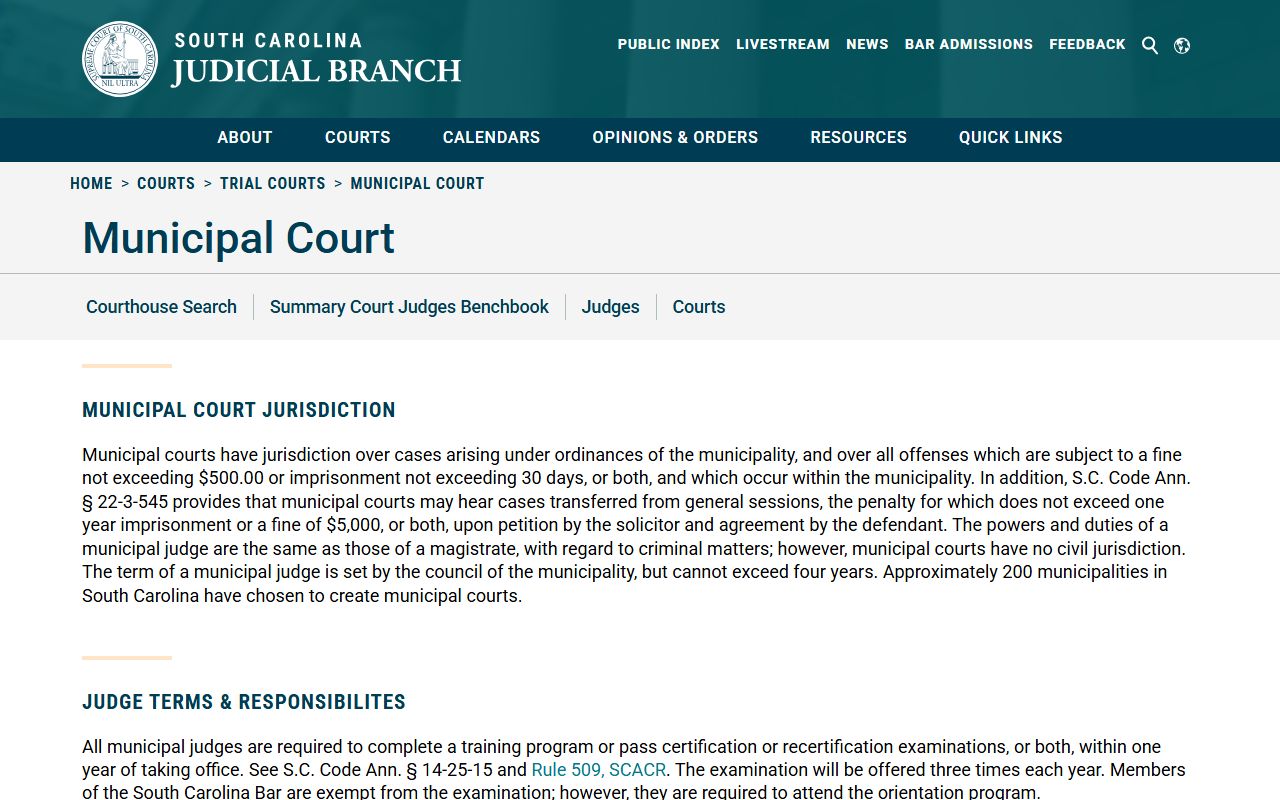
If you are looking for civil court records and the case involves a city or town, the records are held by the county Clerk of Court, not the municipal court. Civil disputes must be filed in Magistrate Court, the Circuit Court, or another appropriate court. Approximately 200 municipalities in South Carolina operate municipal courts, but all of them handle only criminal and ordinance matters. For any civil claim, you must go to the appropriate county court.
South Carolina Laws Governing Civil Courts
The legal framework for South Carolina's civil courts comes from several key statutes. Title 14 of the South Carolina Code of Laws establishes the court system itself. Chapter 5 governs Circuit Courts and their jurisdiction. Chapter 11 covers Masters and Referees. Chapter 17 sets out the duties of Clerks of Courts, including their record-keeping obligations.
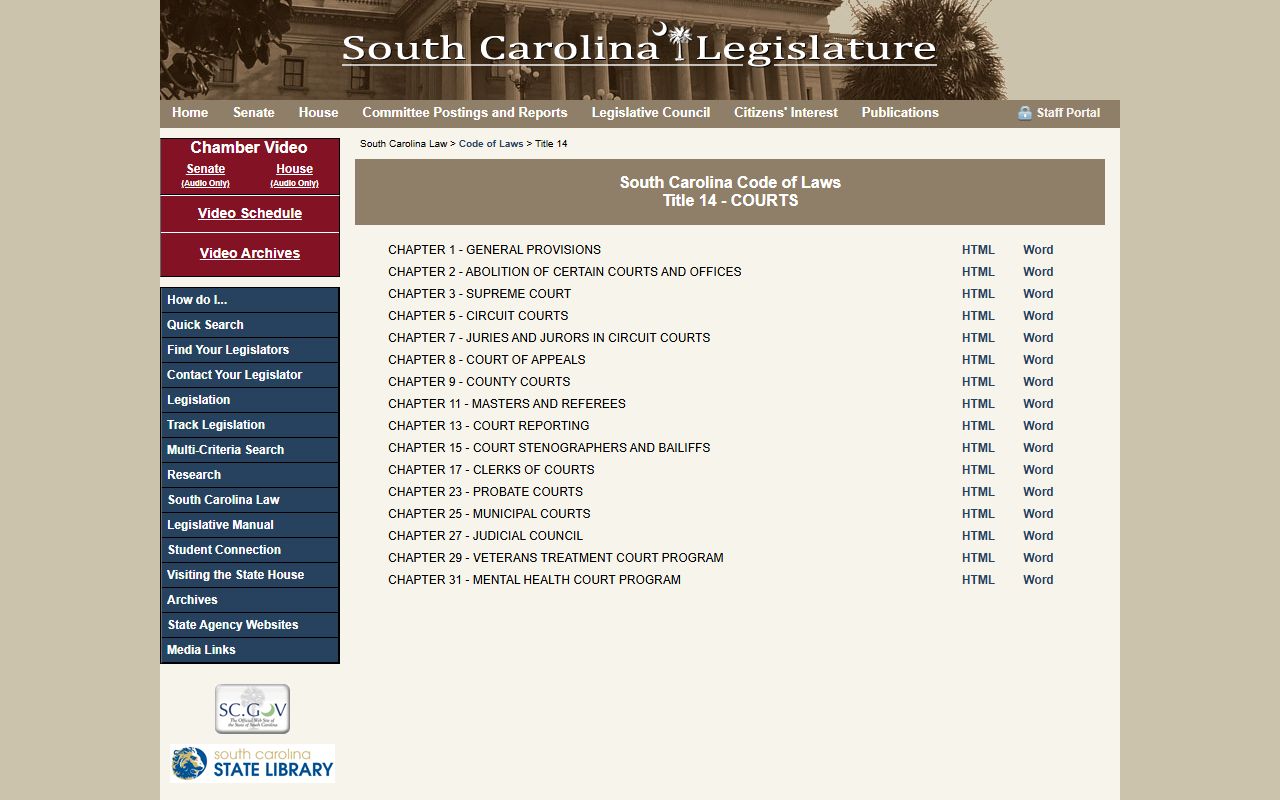
Chapter 23 of Title 14 establishes Probate Courts. Chapter 25 provides for municipal courts. The Clerk of Court in each county is an elected official who serves as the official custodian of all civil court records for that county. Their duties under Title 14 include docket management, receipt of fees, maintenance of all court records, and submission of required state reports.
These statutes work together to create a unified court system with consistent record-keeping standards across all 46 counties in South Carolina.
Civil Procedures and South Carolina Court Filings
How civil cases proceed in South Carolina is governed by Title 15 of the South Carolina Code of Laws, which covers civil remedies and procedures. This title determines how cases are filed, served, and resolved, and it directly shapes the records that courts create and maintain.
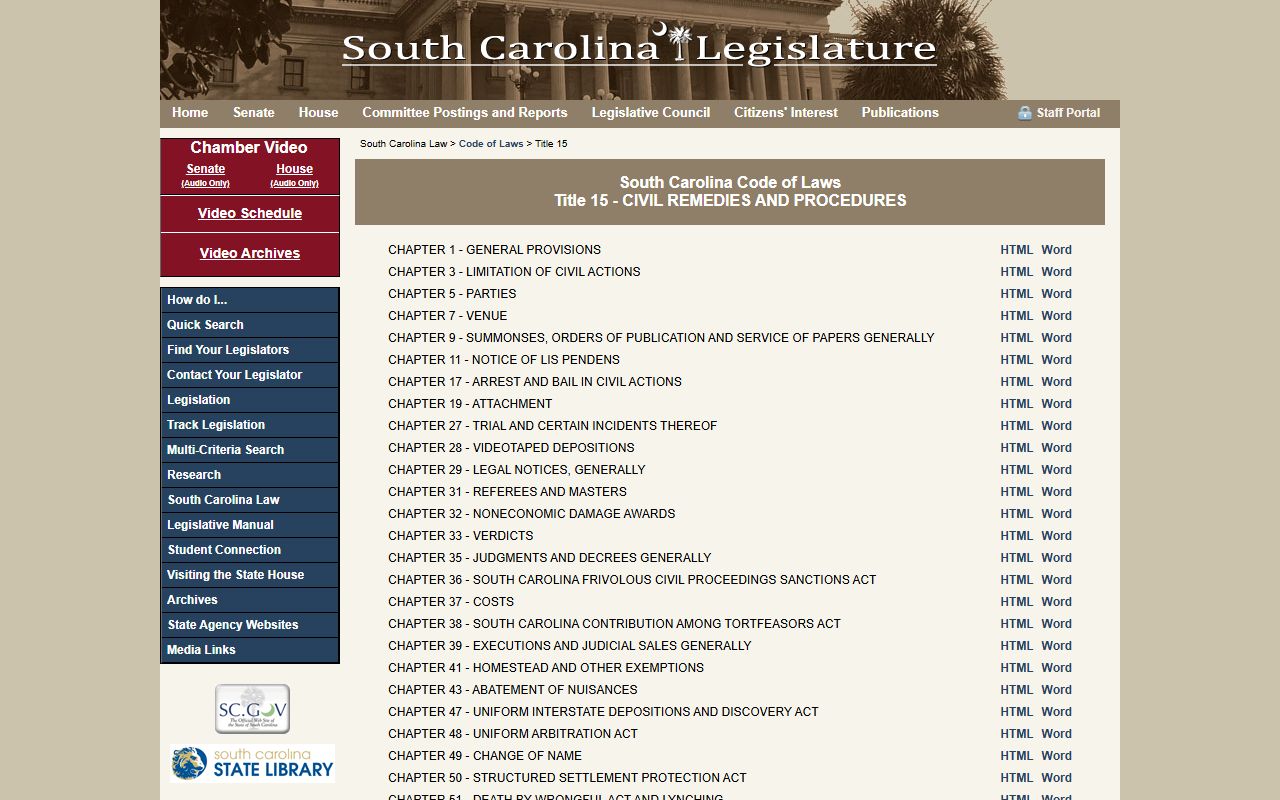
Key chapters within Title 15 include Chapter 3, which sets statutes of limitations for various civil actions. Chapter 7 establishes venue rules for determining the right county. Chapter 35 governs the entry and enforcement of judgments. Chapter 39 covers execution and judicial sales. Chapter 61 governs partition proceedings. Chapter 78 contains the South Carolina Tort Claims Act, which establishes procedures for civil claims against state and local government entities.
The South Carolina Rules of Civil Procedure, found under court rules at sccourts.org, work alongside Title 15. Rule 58 controls when judgments are entered. Rule 60 sets procedures for obtaining relief from a final judgment. Rule 71 covers foreclosure and partition proceedings specifically.
Public Access to Civil Court Records in South Carolina
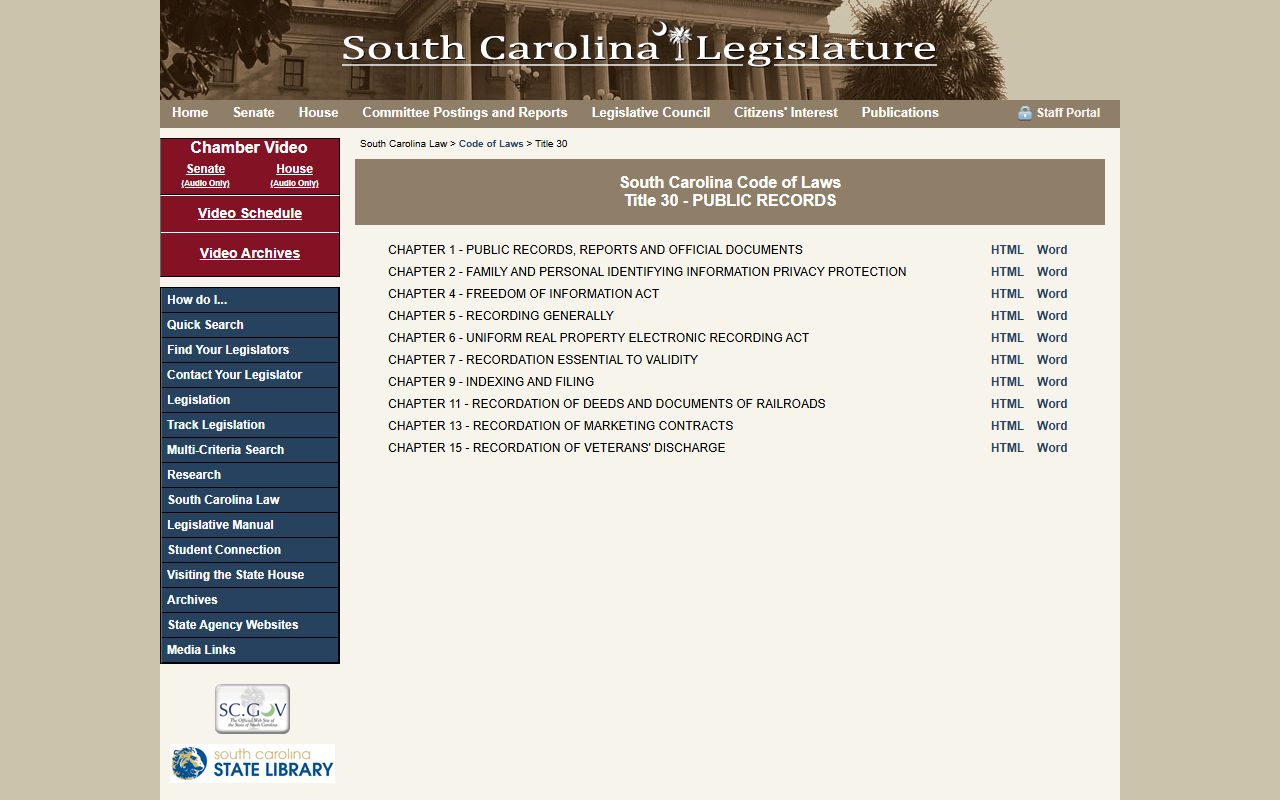
Civil court records in South Carolina are public records. Title 30 of the South Carolina Code of Laws governs public records and establishes access rights. Chapter 4 of Title 30 contains the South Carolina Freedom of Information Act. Under S.C. Code Ann. §30-4-10, the public has the right to inspect and copy government records. This includes civil court records held by the Clerk of Court in any of South Carolina's 46 counties.
Privacy protections apply to certain information in public records. Under S.C. Code Ann. §30-2-330, social security numbers, driver's license numbers, financial account numbers, credit card numbers, and personal identification codes may not be included in documents placed on publicly accessible websites. Individuals have the right to request removal of such information from public-facing court record systems. These rules apply to both new filings and existing case records in South Carolina.
You do not need to be a party to a civil case to access its records. Anyone can search the Public Index or contact the Clerk of Court to view civil case records. Some documents in specific cases may be sealed by court order, but most civil case files remain open to the public.
Self-Help Resources for Civil Court in South Carolina
The South Carolina Judicial Branch provides self-help resources for people who are representing themselves in civil cases. These resources are available at sccourts.org and cover a range of civil court topics.
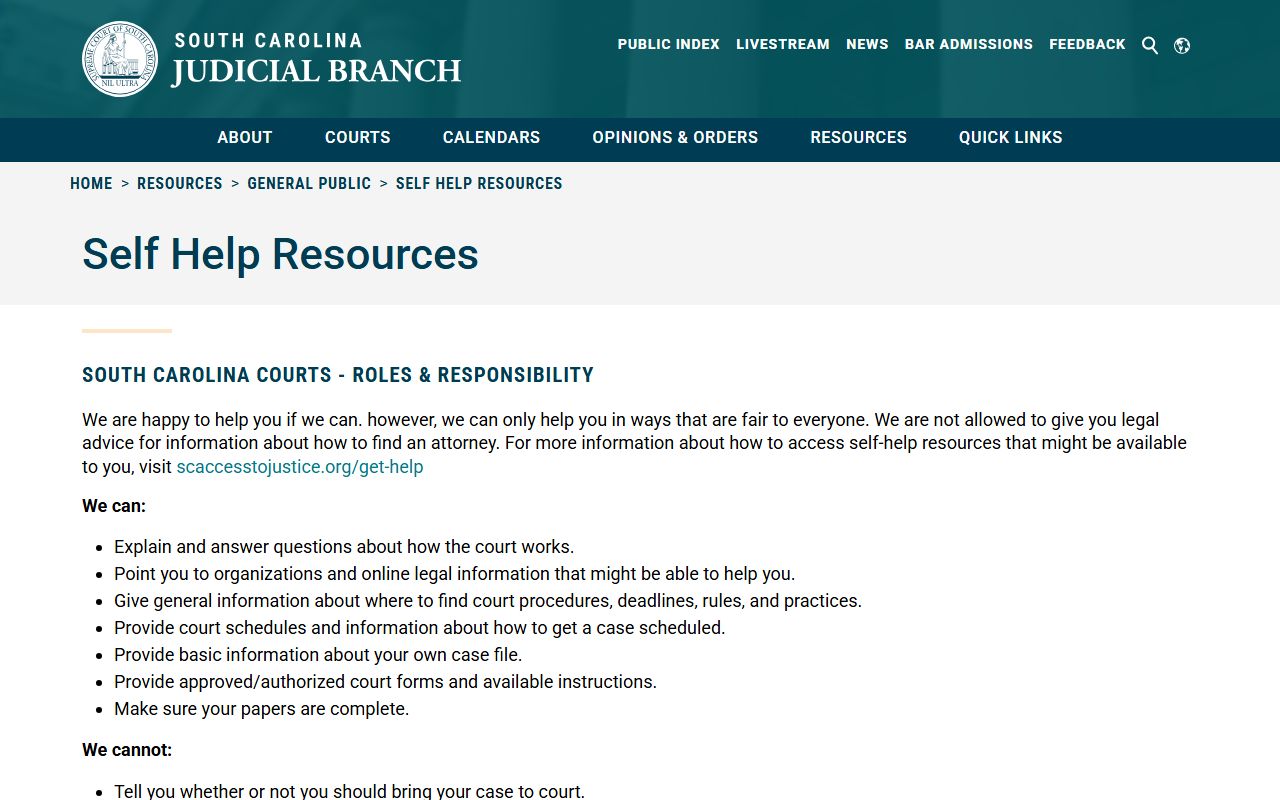
Court staff in South Carolina can explain how the court works, point you to legal organizations, and provide court forms and filing instructions. They can also give general information about procedures, deadlines, and how to get a case scheduled. What court staff cannot do is give legal advice, tell you what to say in your papers, speak to a judge on your behalf, or predict how a judge will rule. For additional help, visit scaccesstojustice.org/get-help for a list of legal aid organizations serving South Carolina residents.
Family Court Records vs. Civil Court Records
South Carolina has a separate Family Court system established by statute in 1976. The Family Court has exclusive jurisdiction over all domestic and family relationship matters. This is distinct from the civil court system under the Court of Common Pleas.
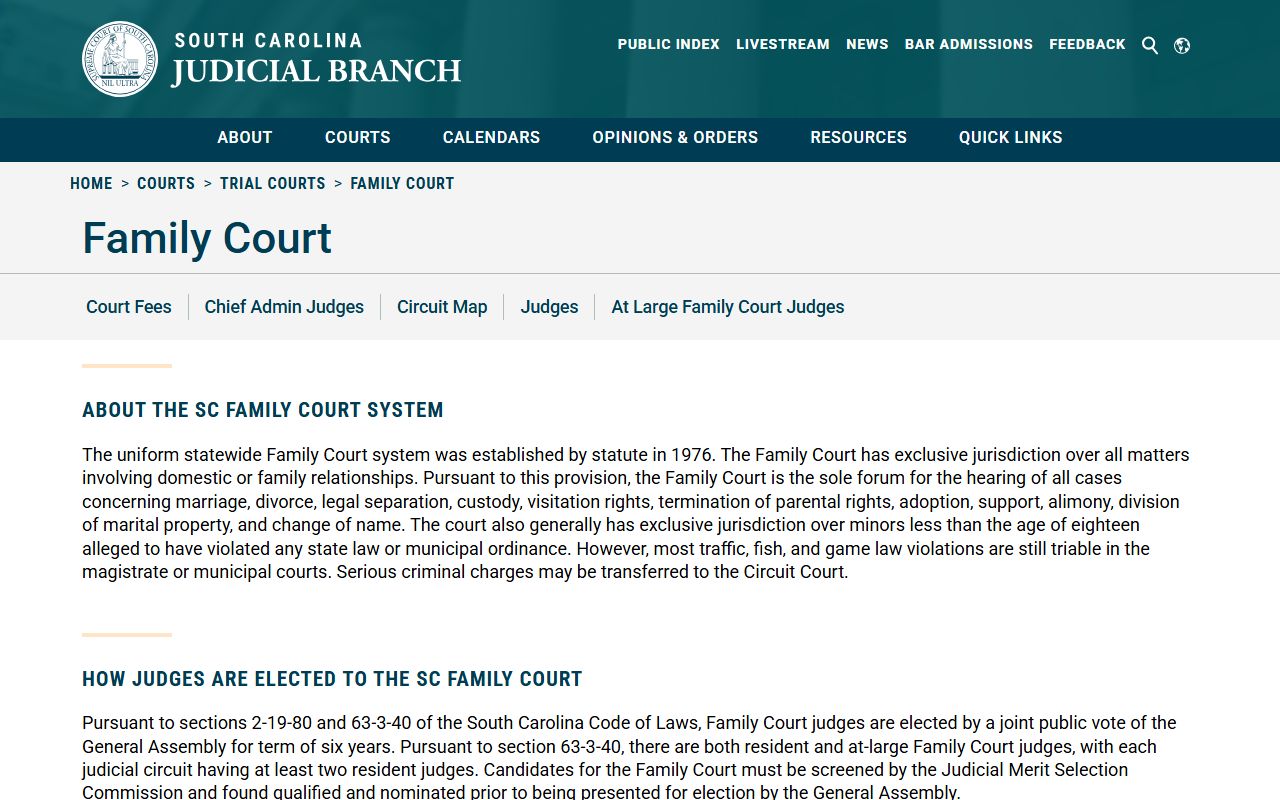
The Family Court handles divorce, legal separation, custody, visitation rights, termination of parental rights, adoption, support, alimony, and division of marital property. These records are filed and maintained separately from Court of Common Pleas civil records. At least two Family Court judges are elected for each of South Carolina's 16 judicial circuits. Family Court case records can be searched through the Public Index at sccourts.org, using the same county-based search system as civil cases.
Federal Civil Court Records for South Carolina
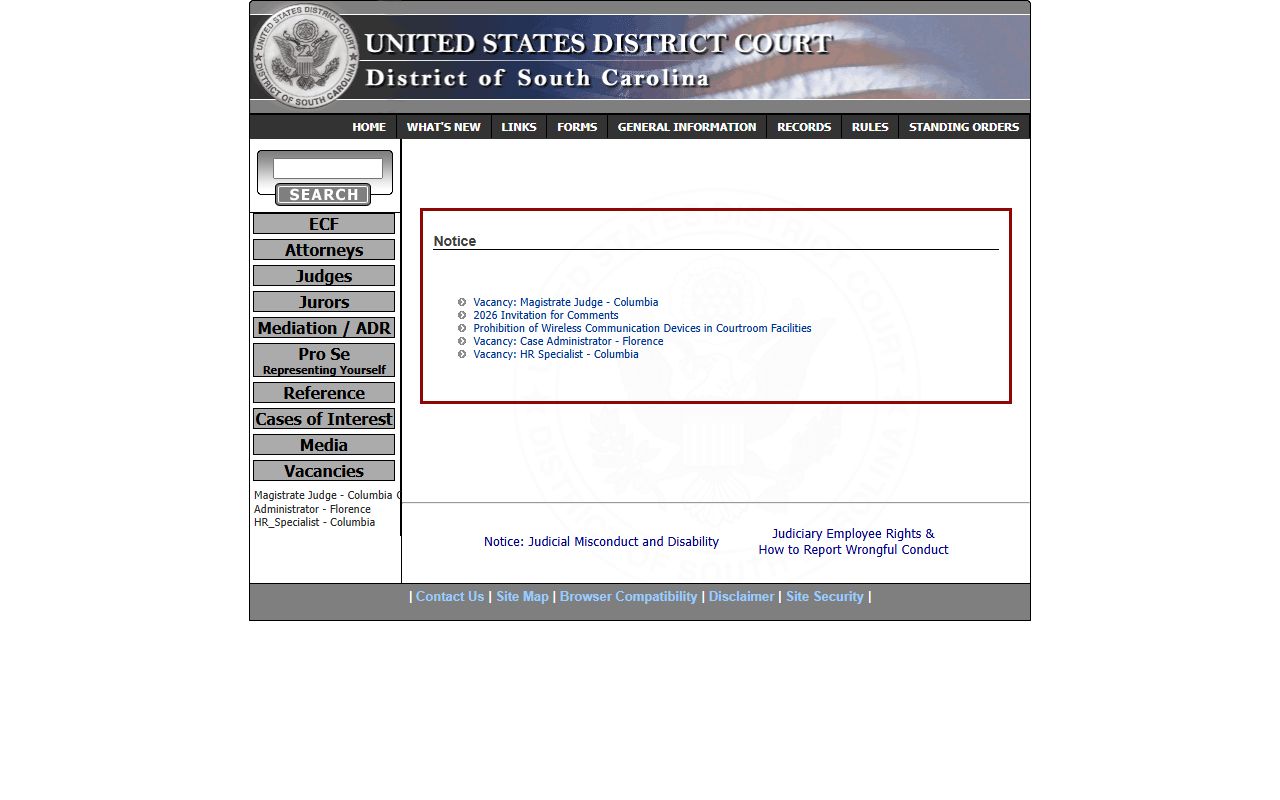
Some civil cases in South Carolina are filed in federal court rather than state court. The United States District Court for the District of South Carolina is the federal trial court for civil and criminal cases arising under federal law within the state.
The federal district court operates through seven divisional offices. The Charleston Division is located at 85 Broad Street, Charleston, SC 29401, phone (843) 579-1401. The Columbia Division is at 901 Richland Street, Columbia, SC 29201, phone (803) 765-5816. The Florence Division is at 401 West Evans Street, Florence, SC 29501, phone (843) 676-3820. The Greenville Division is at 300 East Washington Street, Greenville, SC 29601, phone (864) 241-2700. The Aiken Division is at 223 Park Avenue, S.W., Aiken, SC 29801, phone (803) 648-6896. The Anderson and Spartanburg Divisions also serve the Upstate region.
Federal civil case records from November 1990 to present are available through PACER (Public Access to Court Electronic Records) via the federal court's website. The party index is available to the public Monday through Friday from 9:00 a.m. to 4:30 p.m. at staffed offices in Charleston, Columbia, Florence, and Greenville. If the Clerk's Office performs a name search for you, a $34.00 fee applies for each name searched.
Historical Civil Court Records at SC Archives
For older civil court records, the South Carolina Department of Archives and History is the primary resource. The Archives holds original South Carolina documents dating back to 1671, including historical court records, land records, and other documents of legal significance.
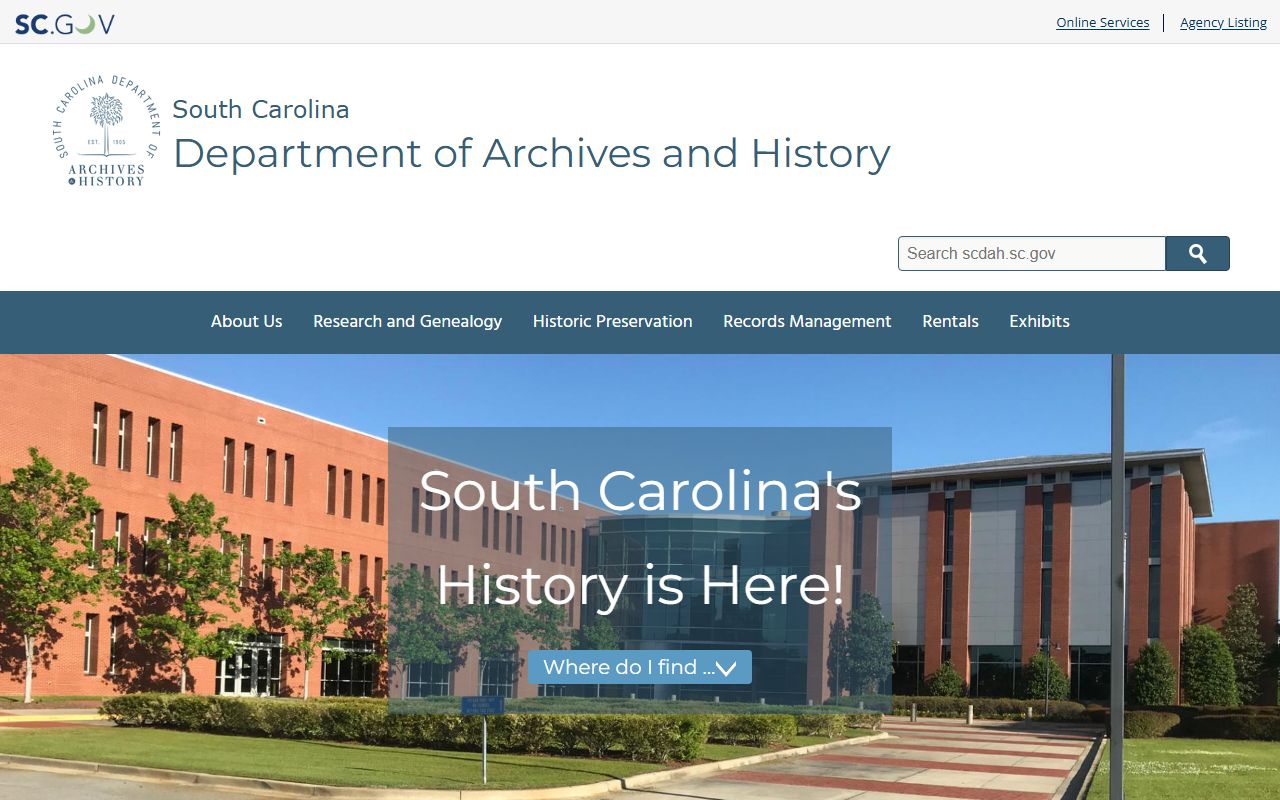
The SC Department of Archives and History is located at 8301 Parklane Road, Columbia, SC 29223. You can reach them by phone at 803-896-6196. The reading room is open Tuesday through Saturday, 8:30 a.m. to 5:00 p.m. The Archives holds over 3,000 cubic feet of county records and its online index includes Criminal Court Records from 1769 to 1944, among other collections. First-time visitors must register. The online catalog lets you search and browse holdings that include county court records, land records, and state agency documents going back centuries.
Note: South Carolina began requiring marriage licenses in 1911 and birth and death certificates in 1915, but court records extend far earlier than those milestones.
South Carolina Rules of Civil Procedure
South Carolina civil practice is governed by the South Carolina Rules of Civil Procedure (SCRCP). These rules govern how cases move through the circuit courts. They cover everything from how documents must be filed to how judgments are entered and appealed.
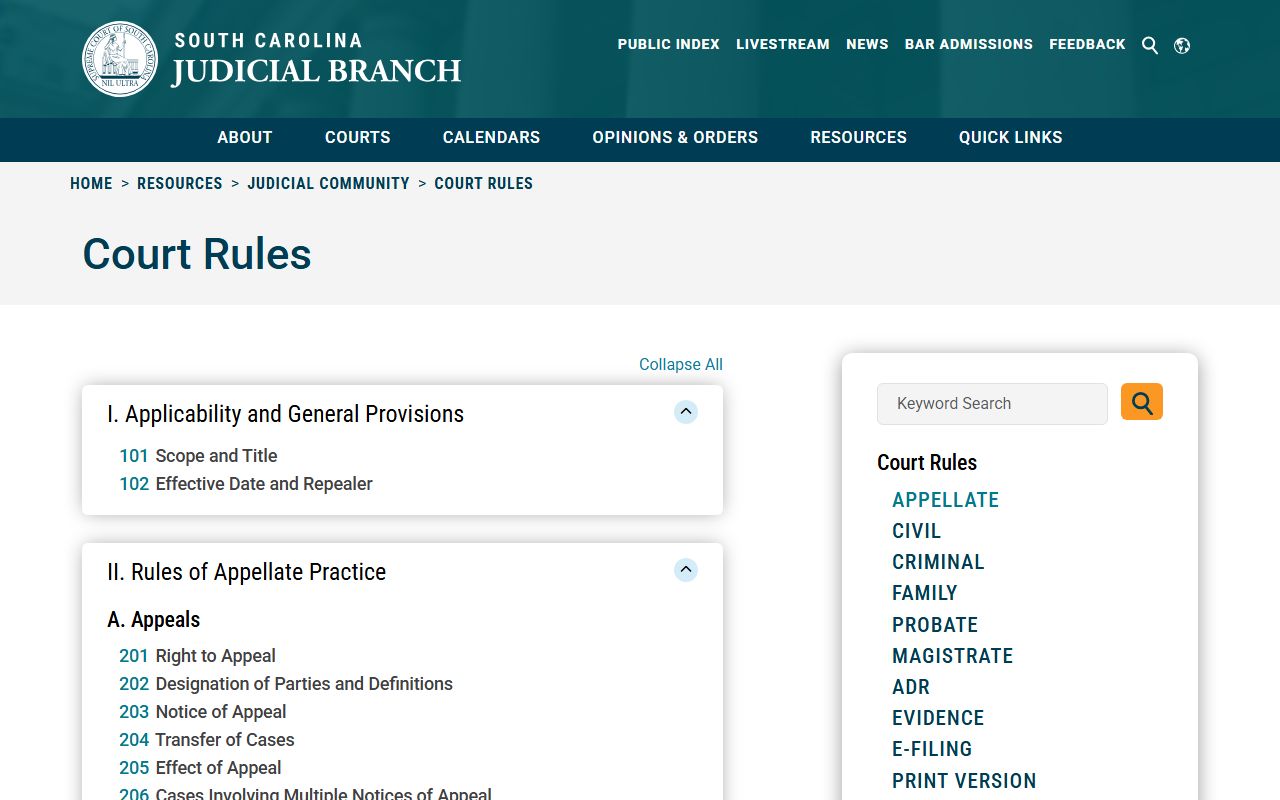
Key rules affecting civil court records include Rule 5, which governs when and how documents must be filed and served. Rule 10 sets formal requirements for pleadings including captions and signatures. Rule 53 governs masters and referees in civil cases. Rule 58 controls when and how judgments become effective. Rule 60 provides procedures for relief from final judgments based on mistake, newly discovered evidence, fraud, or other grounds. Rule 71 covers foreclosure and partition proceedings. All current court rules are published at sccourts.org.
Appellate Court Civil Records in South Carolina
When civil cases are appealed beyond the Circuit Court, those records go into a separate system. The South Carolina Appellate Court Public Index provides access to cases filed with the Supreme Court and the Court of Appeals.
This system, known as C-Track, is available at sccourts.org/c-track-public-access. It covers civil appeals from the Court of Common Pleas, appeals from administrative tribunals, certiorari proceedings, and Post-Conviction Relief cases. Most documents associated with case events are available for viewing. The system generally covers cases filed on or after May 1, 2012. Searching and reviewing information through C-Track is a free public service.
Browse South Carolina Civil Court Records by County
Each of South Carolina's 46 counties has its own Clerk of Court maintaining civil case records. Select a county below to find local civil court resources, courthouse contact information, and direct links to that county's Public Index.
Civil Court Records in Major South Carolina Cities
Civil cases filed by city residents go through the county Circuit Court. Select a city below to find civil court resources and Public Index access for that area.